This article is a month old but I came across it in my research.
Senate Passes Apology For Slavery And Segregation
By Associated Press June 18, 2009 3:02 pm

The Senate has unanimously passed a resolution apologizing for slavery and racial segregation and sent the measure to the House.
Iowa Democrat Tom Harkin first introduced the measure years ago but wanted it passed Thursday on the eve of Juneteenth - a day of celebration commemorating the end of the Civil War and the release of African Americans from slavery. He said the House is to take it up soon and that a formal celebration will be held next month in the Capitol Rotunda.
The Senate has passed such nonbinding but highly symbolic resolutions before, apologizing for such things as the internment of Japanese-Americans during World War II.
The resolution passed Thursday includes a disclaimer saying that nothing in it supports or authorizes reparations by the United States.
SLAVERY IN THE WHITE HOUSE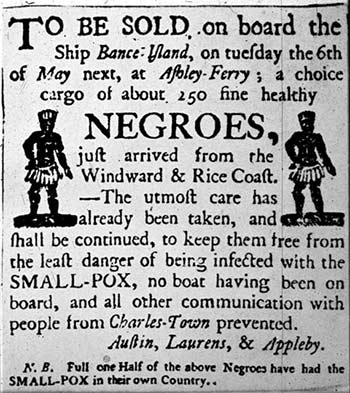
Jamestown, 1619 The first slaves brought to Virginia
Arab Slave Trade
While Europeans targeted men in West Africa, the 'Arab' trade primarily harvested the women of East Africa to serve as domestic slaves, wet nannies and sex-slaves in the infamous harems. This trade trickled over millennia is estimated to have taken 10 million Africans via the Eastern route to India, Saudi Arabia, and Turkey, and also via the Trans-Saharan route to North Africa and the Mediterranean, where in slave markets such as Ceuta, Morocco, Africans were purchased to work as servants in Spain, Portugal, and other European countries.
This trickle trade really only boomed in the 18 th and 19 th century, prior to this period the trade between Arabia and Africa was more focused on iron, ivory and animal products. There is very little evidence in the sources to support the claim that slaving was ever a major enterprise of any significance prior to the 18 the century boom.
LEGACY AND DIFFERENCE
Arab enslavement of Africans was radically different from its European counterpart. It was more complex and varied depending on time and place. Thus the slavery seen in Iraq with the zanj was not similar to slavery in Zanzibar. Also 'Arab' is not a racial group, some Arabs are African and some are White and Jewish.
One of the biggest differences between Arab slaving and European slaving was that slaves were drawn from all racial groups and they were rarely used as a means of crop production; slaves were not the economic engine behind Arab economies. Arab slavery generally lacked large droves of sugar plantations where slaves toiled to the crack of a whip in the hot sun . Unlike the European trade in enslaved Africans the physical remnants of this trade are very hard to measure. There are no Ghettos, mental institutions or prisons holding African people. Many women stolen from Africa were stolen to serve the infamous Arabian harems; their children were thus born free to Arab fathers and thus would have been heirs to wealth and status, fully and equally assimilated into the population. Many African people thus rose to great stations by virtue of their Arab fathers. The infamous eunuchs were infertile, and the other men who were enslaved would have gradually married non-African women, hence facilitating the absorption of African culture and lineage into an Arab one. The contrasting differences between racial definitions on the Arabian continent as oppose to Europe assist in blending the majority of Africans stolen from Africa into the general population of Arabia. However, in the West there was no transcending “racial stigmas.”
ISLAM AND SLAVERY
When Islam arrived, war and servitude were features of African and Arabian life. Judaism existed among certain Arab tribes as well as Christianity, and like them Islam did not blatantly out law slavery; Islam did however blatantly outlawed chattel enslavement. The Qu'ran with every reference to slavery ask the believer to free the slave as atonement for sin, the term "emancipating a slave and feeding an orphan" are repeated constantly throughout the Qu'ran as acts which gain God's favor. Also there were regulations which enhanced the pre-Islamic laws with respect to the treatment of enslaved people. They were entitled to good care, to the same clothing and food as their masters. These enslaved people were more akin to indentured servants in Europe than Chattel slaves in the Americas.
They are your brothers whom Allah placed under your hands. Feed them with what you eat, clothe them with what you wear and do not impose duties upon them which will overcome them. If you so impose duties, then assist them.
Whoever kills his slave, we will kill him.
Whoever slaps his slave or strikes him, his atonement is to free him" (narrated by Muslim by the way of ibn Umar).
It became a fundamental principle of Islamic jurisprudence that the natural condition, and therefore the presumed status, of mankind was freedom. Despite this, there were the greedy and the vindictive that sought to make slaves of their Muslim brothers and sisters as well as other Africans. There were also many Christian and Jewish Arab tribes and well as other indigenous Arabs that continued their tradition of slaving. Because Islamic Sharia had laws pertaining to slavery it was seen by the opportunist as a natural God sanctioned feature of life. Conveniently, the numerous laws of manumission were given a social back seat.
Overzealous Europeans have always over-documented the Arab trade in enslaved Africans to alleviate their guilt concerning their own trade. "Well the Arabs did it too " became the common tone of contemporary historians. Sadly, many African-American historians who have only these European sources to infer history from have taken these second-hand guilt-massaging accounts as gospel. However, it is a well-known fact that Europeans in their artistic depictions of slave raids have always intentionally portrayed slave raiders as Muslim Africans or Arabs .


 Posts
Posts



0 responses:
Post a Comment